The oldest part of Málaga fits on a single hillside. Roman stone at the bottom, a Moorish palace-fortress halfway up, a castle at the top. You can walk all of it in one unhurried morning, and you will understand a great deal about the city by doing so.
On foot · Half day · Uphill route
Roman Theatre · Alcazaba · Gibralfaro Castle
Allow three to four hours at a comfortable pace. Mornings are cooler for the climb; late afternoon brings the best light at the top. Both work. What matters is not having to rush.
Few cities let you move through two thousand years of history in a single walk. Here, each stop was built on top of the one before, sometimes quite literally: the Moorish builders of the Alcazaba reused Roman columns from the theatre below. Walking uphill is, in a way, walking forward in time.
The route, stop by stop
Three stops, one hillside
The route follows the natural order of the hill. Start at street level and let the city open up beneath you as you climb.
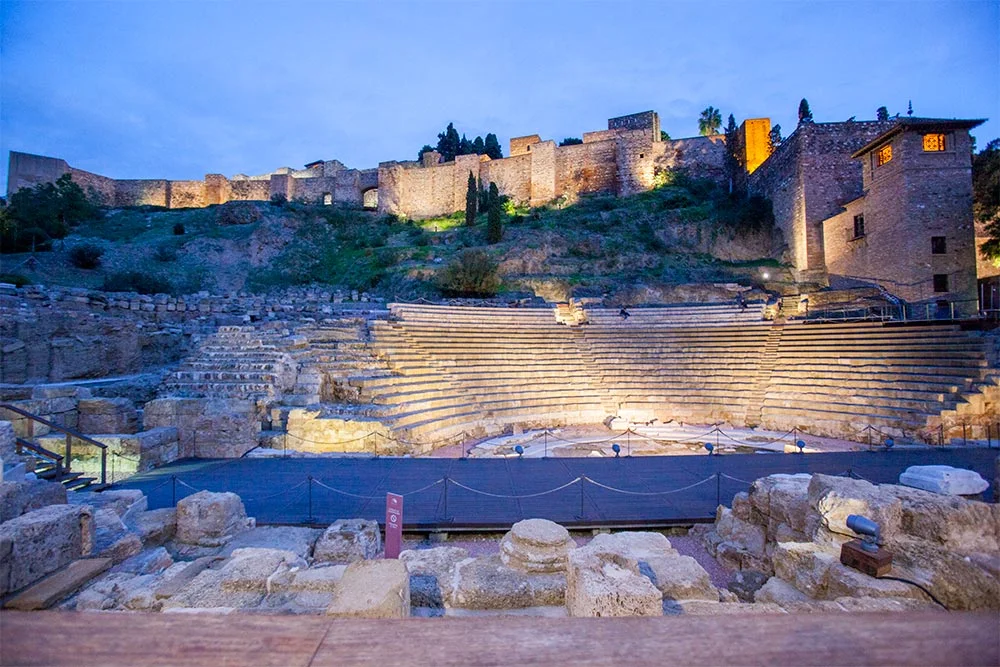
1. The Roman Theatre
Built in the 1st century BC, in the time of Augustus, and hidden for centuries until its rediscovery in 1951. Entry to the site and its small interpretation centre is free. Take a seat on the stone tiers before moving on: it is one of the quietest places in the old town.
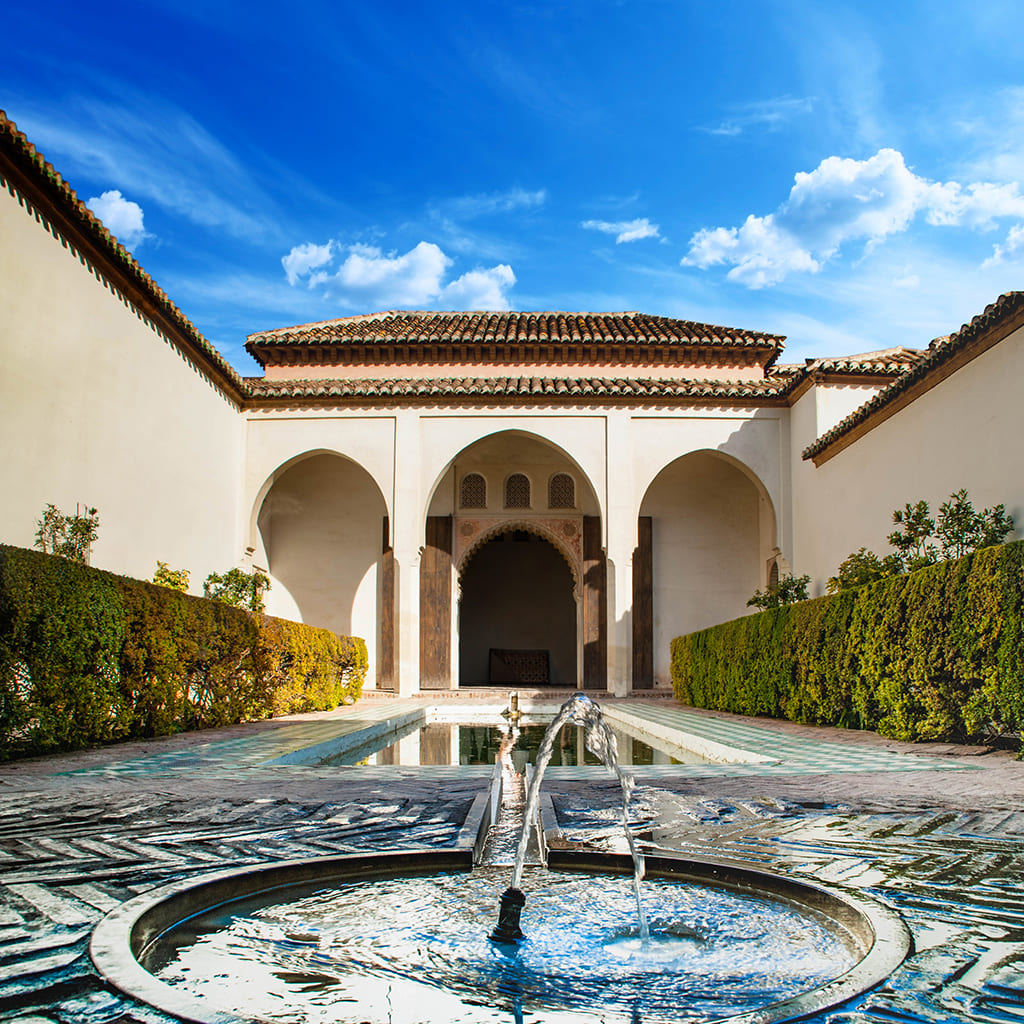
2. The Alcazaba
An 11th-century palace-fortress rising right above the theatre. The path winds through gateways, arches and small courtyards with running water and orange trees. There is no need to see everything. Stop where the light or the sound of a fountain holds your attention.
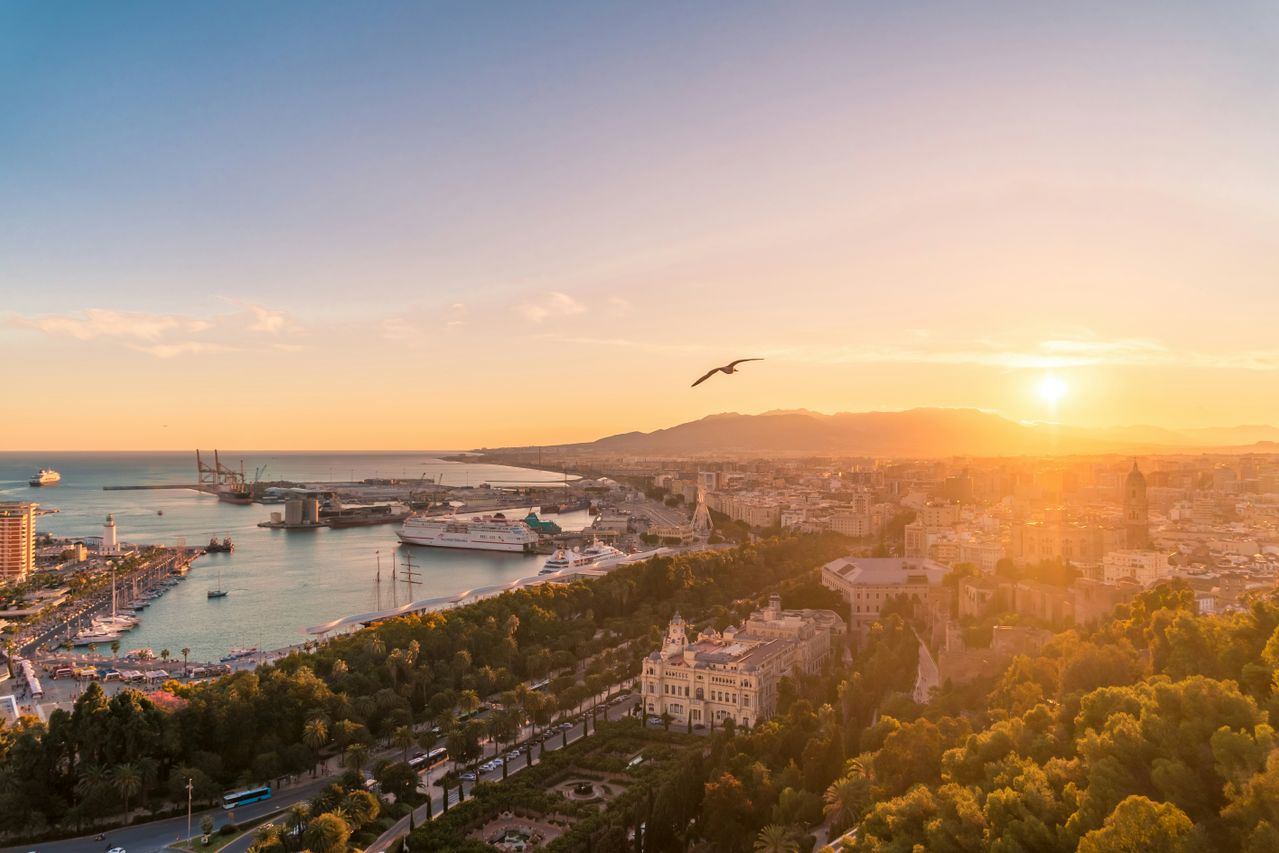
3. Gibralfaro Castle
Built in the 14th century on the site of an ancient lighthouse, which gave the hill its name. Walk along the ramparts for the widest view in the city: the port, the bullring, the cathedral roof and, on clear days, the mountains behind it all.
Before you go
A few details we have thought about for you
Small things make the difference between a walk you enjoy and one you simply get through.
-
▸
Wear comfortable shoes: the paths are old stone, polished by centuries of footsteps, and can be slippery.
-
▸
One ticket, two monuments: a combined ticket covers both the Alcazaba and Gibralfaro Castle.
-
▸
Bring water: especially between June and September. There is little shade on the way up.
-
▸
Choose how you climb: if you would rather not walk up, the city bus reaches the castle. You can then walk down through the pine trees instead.
-
▸
Check opening times: they change with the season, so it is worth confirming the day before.
Where to pause
A table facing two thousand years
Once you are back at street level, Calle Alcazabilla runs along the foot of the Roman Theatre. Its terraces face the stone tiers directly, with the Alcazaba walls above. Few places in the city put this much history this close to your table.
From there, Plaza de la Merced is a two-minute walk. It is a natural place to end the route: open, lively in the evening, and the square where Picasso was born. A good starting point, if you want to continue the day with the next chapter of the city.
Beyond the postcard
Six things most guides leave out
Most descriptions of this hillside stop at dates and dimensions. The details below are the ones that change how you look at what is in front of you, and all of them are visible on the route itself. Read them before you go, and the walk becomes a different experience.
1. The city’s coat of arms is the view you are standing in
After the Catholic Monarchs took the city in 1487, they granted Málaga its coat of arms on 30 August 1494. What appears on it is not a symbol invented for the occasion: it is this exact hillside, drawn as it stood. The Alcazaba with its Corral de los Cautivos, the Coracha climbing the slope, and Gibralfaro Castle at the top, with the city’s patron saints, Ciriaco and Paula, above the towers.
You will find that same shield on manhole covers, on municipal buildings and on documents all over the city. Once you have walked the route, you recognise it everywhere. It is a small thing, and it quietly connects the monument to the everyday life of Málaga.
2. The Coracha, of which only two survive in Spain
The zig-zagging double wall that links the Alcazaba to the castle is called the Coracha: a protected passage of two parallel walls crowned by a walkway, climbing the hill so that troops and supplies could move between the two fortresses without ever being exposed. Its design avoided the need to build separate outlying towers, and the only monumental gate of the castle opened onto it.
Only one other Coracha of this kind survives in Spain, in Badajoz. Travellers and chroniclers of the conquest singled it out as the most striking feature of the whole fortification. In the 19th century, a neighbourhood of modest houses grew on the lower slope and took its name, the Barrio de la Coracha. Those houses are gone now, but the wall is still there, and you walk beside it on the way up.
3. There is a Roman fish-salting vat inside the Moorish fortress
Just after the Puerta del Cristo, protected by a low railing, there is a grain silo whose mouth opens in the floor of a Roman vat once used for salting fish and making garum, lined with opus signinum, a hard mortar packed with pottery fragments that is still perfectly visible.
The reason is practical rather than symbolic: this part of the hill is solid rock without fissures, so nothing seeps through, and the south-facing slope gets sun all day. That is why the Romans filled it with salting vats, and why it was very probably used the same way when Malaka was a Phoenician trading post. Three thousand years of people choosing the same corner of the hill for the same reason.
4. A well thirty metres deep, cut into the rock
In the northern part of the castle, behind a gate, is the Pozo Airón: a well thirty metres deep, cut straight into the rock of the hill until it reaches a natural spring. The base of a waterwheel used to raise the water is still there. It is the reason the castle could hold out under siege, and it explains why the fortress was built on this hill and not another.
In the summer of 1487 the castle withstood the siege of the Catholic Monarchs. After the city fell, King Ferdinand made Gibralfaro his residence, while Queen Isabella chose to stay down in the city.
5. The pine woods are younger than the grandparents of the city
The green hill you see today is not the historical one. Until 1939, when the reforestation of Mount Gibralfaro was carried out, the slope was deliberately bare: no trees meant no cover for ambushes, no risk of fire, and a clear view of the fortress from every point in the city and from the sea.
The pines gave Málaga a green lung and a beautiful setting, and took away the image of an impregnable rock. Worth knowing as you walk up through the shade: the trees are part of the 20th century, not the 14th.
6. The theatre spent fifty years under the “House of Un-culture”
Between 1940 and 1942, the city built its Casa de la Cultura on this exact spot. In 1951, during garden works in front of it, the first remains of the Roman theatre appeared. The building went up all the same, sitting on top of the monument, and the people of Málaga renamed it the Casa de la Incultura, the House of Un-culture.
It took decades of public pressure to reverse that decision. Large-scale excavation began in the mid-nineties, the modern building was demolished in 1995, and in 2010 the interpretation centre opened: a prism of steel, wood and glass whose outer walls reproduce fragments of the Lex Flavia Malacitana, the Roman law that governed the municipality of Malaca. A city that decided, eventually, to take a building down in order to give a monument back.
One more, for the curious
In the Taifa palace there is a room still covered by its original 16th-century Mudéjar timber ceiling, an octagonal centrepiece of muqarnas surrounded by eight-pointed stars. King Philip IV stayed in this room when he visited Málaga in 1625. It is easy to walk past it: look up.
Opening hours
The Alcazaba and Gibralfaro open every day: from 1 April to 31 October, 9:00 to 20:00; from 1 November to 31 March, 9:00 to 18:00. Last admission is one hour before closing, which is the detail people most often miss. Arriving at 19:30 in August means you will not get in.
The Roman Theatre has its own schedule, usually Tuesday to Saturday from 10:00 and shorter hours on Sundays and public holidays, and it closes on Mondays. The open-air site can be seen from the street at any time, but the enclosure and the interpretation centre follow those hours. Timings shift with the season and with special events, so it is worth checking the day before.
Getting up the hill
Three ways up, including one without steps
The classic route is a climb over cobbles and ramps. It is not difficult, but it is uphill in the sun, and it is not the only option. Knowing the alternatives in advance means the hill decides less about your day than you do.
-
▸
The lift on Calle Guillén Sotelo: behind the City Hall, a tunnel leads to a lift that rises to the palace level of the Alcazaba. It holds sixteen people and runs during the monument’s opening hours. You still need a ticket, and there are machines at the entrance to the tunnel. It makes the visit possible with a wheelchair or a pushchair, and it turns the route around: you start at the palaces and walk down to the Roman Theatre.
-
▸
On foot, by the Paseo de Don Juan Temboury: the walking route from beside the Alcazaba up to the castle. Shade in parts, viewpoints on the way, and around twenty to thirty minutes at a steady pace.
-
▸
By bus: a city bus line climbs to the castle from the centre. A good way to go up fresh and walk down through the pines, which is the easier direction and the better one for photographs.
-
▸
Note on the two monuments: the Alcazaba and the castle have separate entrances and are visited separately, even with a combined ticket. Plan them as two stops rather than one continuous walk.
Where to stay
Stay where the route begins
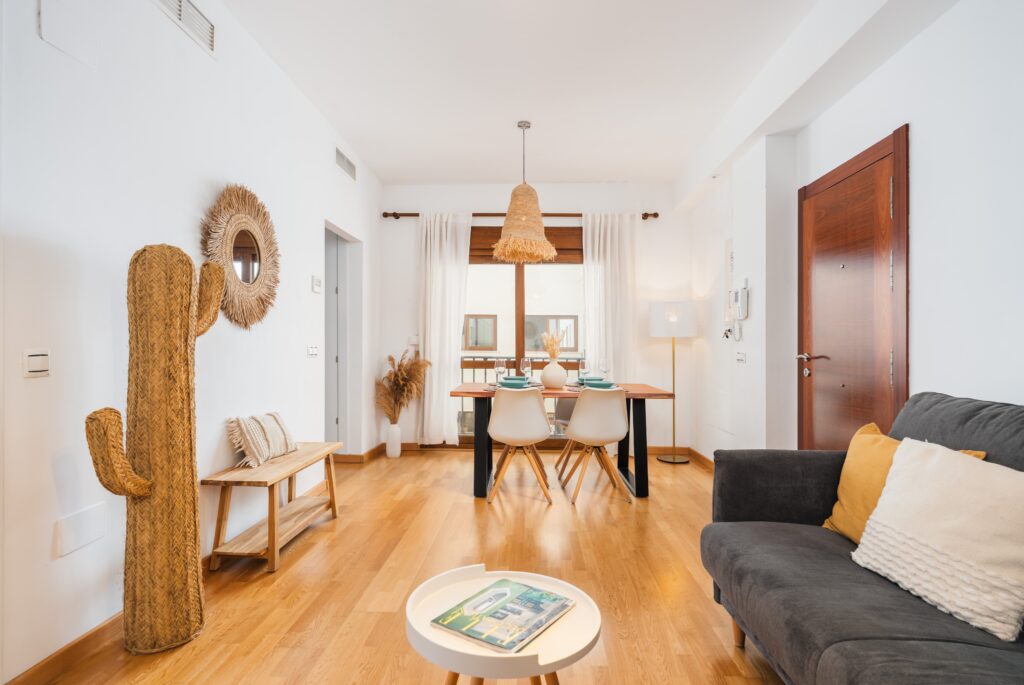
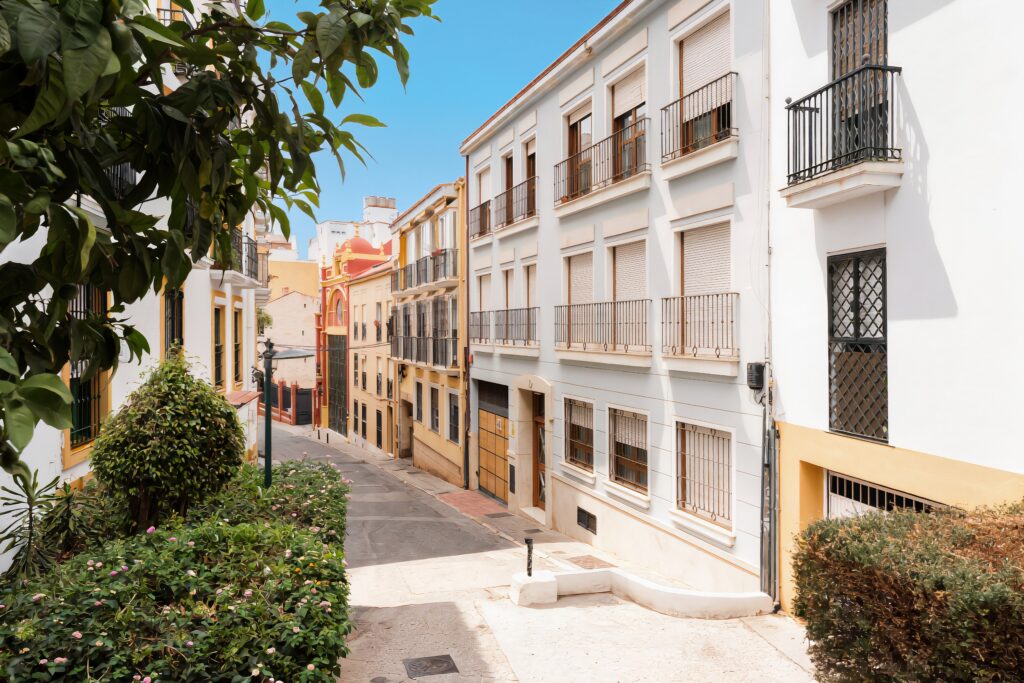
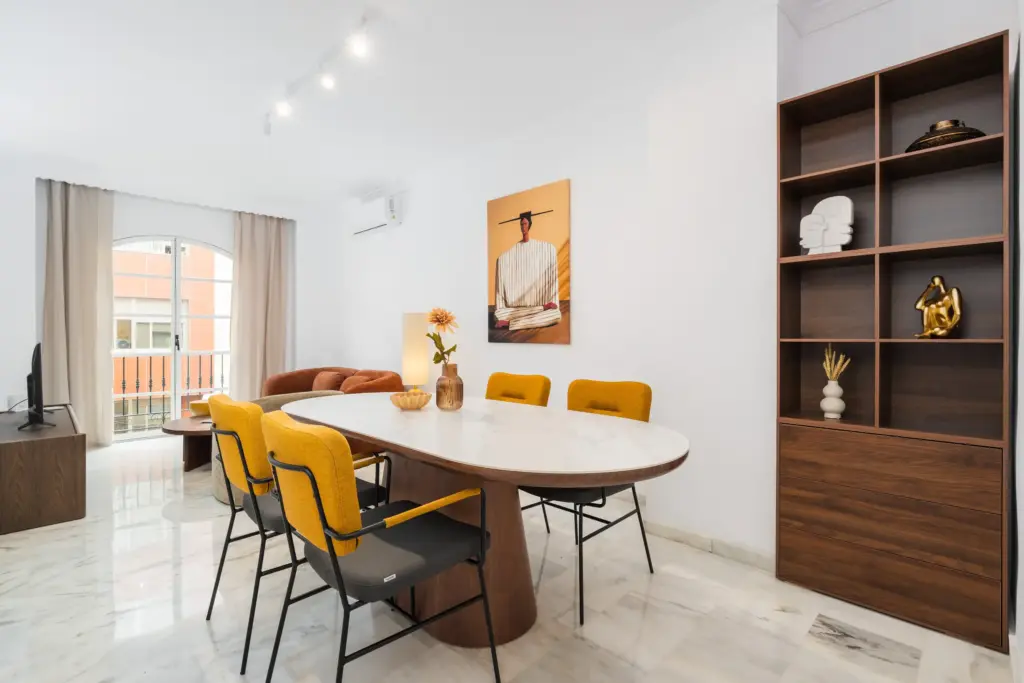
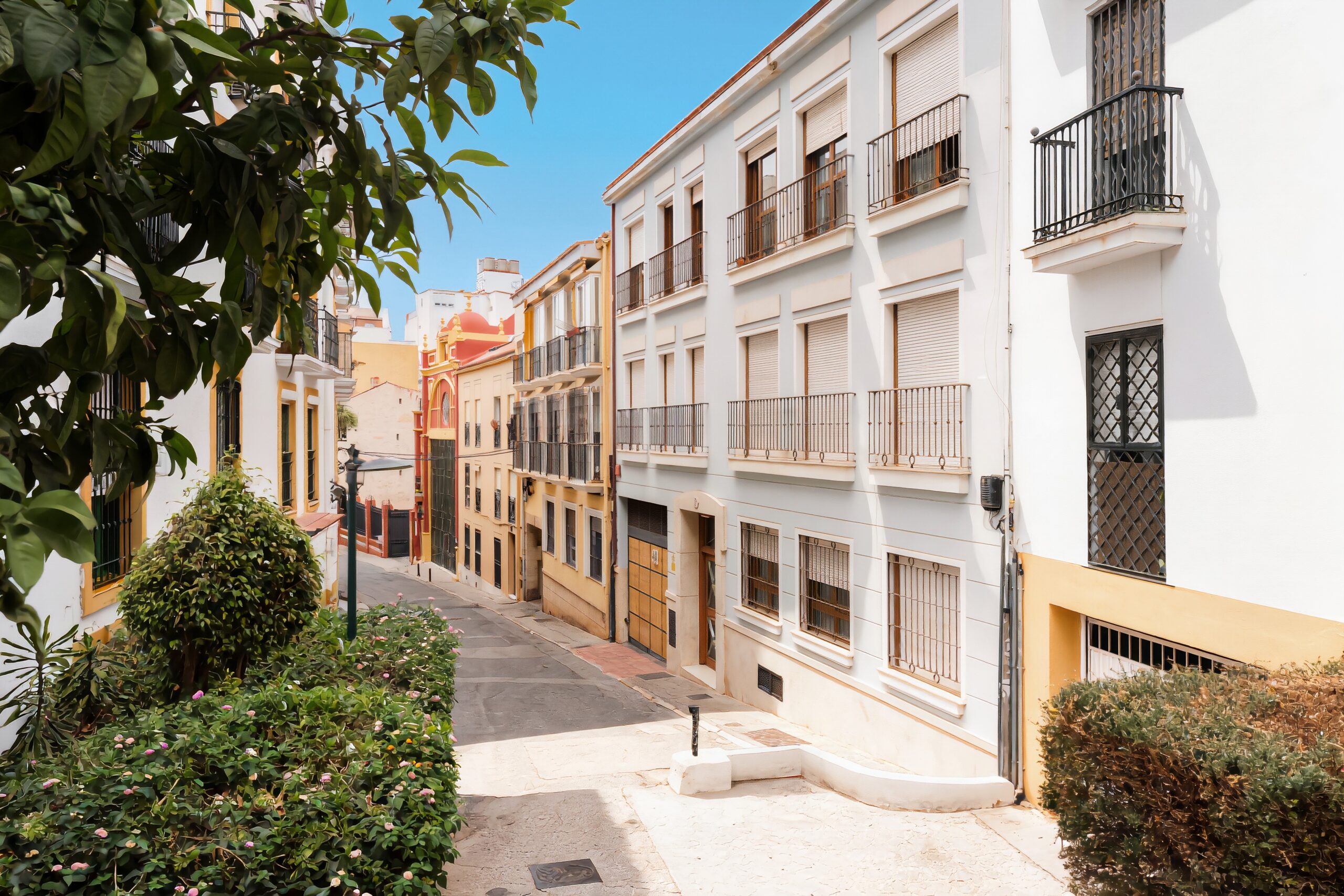
The Roman Theatre is a short walk from anywhere in the historic centre. Staying close changes how the day works: visit the Alcazaba in the cool of the morning, rest during the hottest hours, and return to Gibralfaro for the evening light. No transport to plan around, no reason to hurry.
Your base in the old town
Everything within walking distance
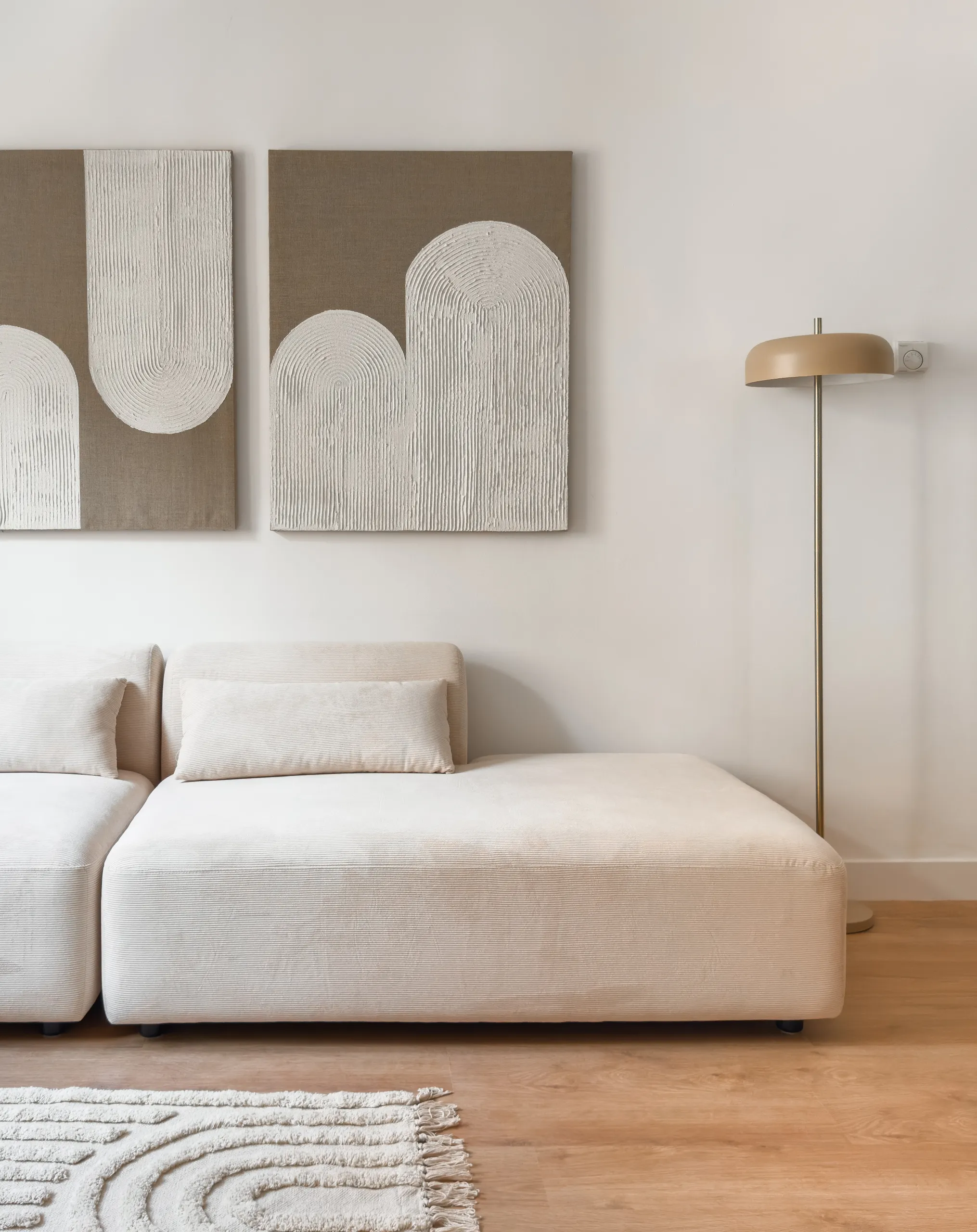
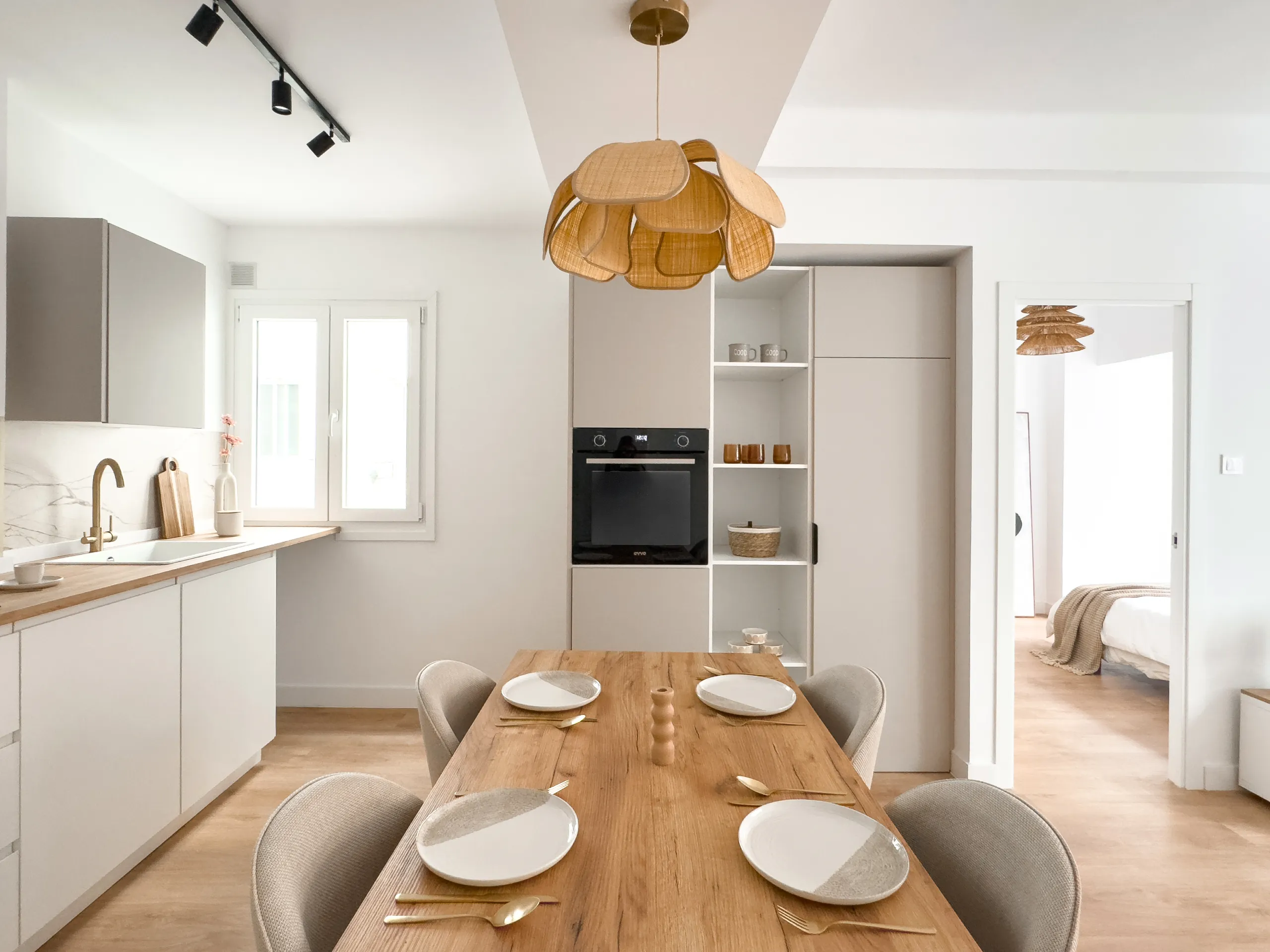
We have chosen our homes in the historic centre so the city’s most important places are minutes away on foot. Thoughtfully designed spaces, quiet rooms to return to at midday, and everything prepared so that you can spend your time on what matters.
Agua Moana and Victoria Moana: in the historic centre, just minutes walk from the Roman Theatre.